
How people play
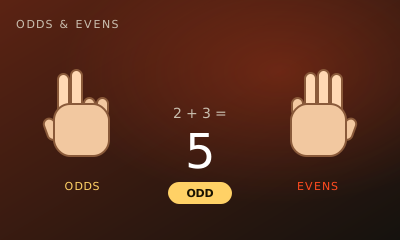
Each round one player is Odds and the other is Evens. Both throw one to five fingers at once, the total is added up, and odd or even decides the round. First to 5 wins. Most new players throw whatever feels lucky; experienced players keep a mental tally of what their rival threw last.
Common challenges
- Falling into a rhythmAlternating odd, even, odd is just as readable as repeating the same throw.
- Forgetting the role swapRoles change every round. A throw that won last round as Odds can lose the next as Evens.
- Tilting after a lossPeople switch after a loss more often than chance would say, and a good opponent waits for it.
What strong play proves
Winning Odds & Evens over a long match shows you can stay unpredictable under pressure while spotting the small habits other people cannot hide.
What it improves
- Opponent readingYou track habits, bluffs, and tells across rounds.
- Pattern recognitionWins come from spotting shapes, threats, and repeats early.
- ComposureMistakes happen — recovering cleanly is the real skill.
- Mental mathTotals, odds, and distances get calculated on the fly.
Best for
Settling who goes first, who picks the film, or who does the dishes.