
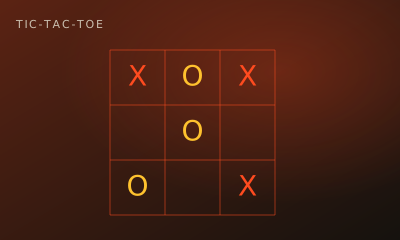
How people play
Kids use it as a first fair duel. Adults use it as a warm-up, a teaching tool, or a pride match when someone claims “I never lose.” Online rooms and Local vs both work — the whole game fits in a coffee break.
Common challenges
- Sleepwalking openingsPlaying center-or-corner on autopilot without watching the fork your opponent is building.
- Missing the double threatBlocking one two-in-a-row while another line quietly becomes unstoppable.
- Tilt after a drawPerfect play often draws — the skill is resetting and forcing mistakes next game.
What strong play proves
A clean Tic-Tac-Toe win (or an unbroken draw streak) shows you can track every threat, refuse greed, and punish the first lazy move. It proves board hygiene more than flashy genius.
What it improves
- Forward planningYou rehearse “if I do this, they do that” before you commit.
- Pattern recognitionWins come from spotting shapes, threats, and repeats early.
- ComposureMistakes happen — recovering cleanly is the real skill.
- Social playShared rules create fair trash-talk, coaching, and laughs.
Best for
First-time multiplayer, younger players, and anyone who wants a rules-light duel before jumping into larger connection games.